


Nearly half of Tasmania is National Park and wilderness. The Tasmanian Devil is endemic to Tasmania, as was the Tasmanian Tiger – a magnifcent marsupial preditor which was seemingly wiped out by the early settlers. The last known tiger died in captivity in 1930, but thousands of sightings over the years lends hope to its survival in the wild. The bush forest is impenetrable by foot and a huge area in the south west of the country is wild and inaccessible, so it is tempting to hope that a small community still lives out there somewhere.

Hobart and Sea Shepherds
We flew into Hobart and due to an unexpected upgrade ended up with a massive 4×4 Nissan Patrol with large bull bars to drive around Tasmania’s narrow roads. My daughter Naomi ended up being a better driver in it than me, after I managed to lock up the transmission in a car park ! Hobart is a pleasant town set in an imposing natural harbour, with a fishing port and rows of lovely stone terraces now converted to bars and restaurants. While we were there the Sea Shepherd boats docked from Antarctica where they have been harrying the Japanese whaling fleet over the summer.

Port Arthur
Port Arthur is a 2 hour drive from Hobart and was one of the island’s worst prisons for offenders exiled from Britain. It was a strange phenomenum which drove the British to send so many convicts to Australia at the beginning of the 19th century. The root cause seems to have been the industrial revolution which mechanised farming and crafts causing a mass exodus of poor people to the cities in search of work. Many turned to petty crime to stave off starvation and the punishment was dire. For stealing rashers of bacon or bread a boy, man or woman could be sentenced to 7 years jail. They soon ran out of prison space so they simply deported them to Australia along with soldiers and prison guards. Port Arthur operated from 1830 until 1877 and the site was chosen because escape was so difficult. The prisoners cut trees and built boats in a shipyard, but life was terrible and many tried to escape, usually to be caught and brought back or sometimes hung.

River Gordon Reflections
The River Gordon area is remote and beautiful, accessible only by boat from Strahan in the far west of Tasmania. The forests are home to some of the oldest trees on earth – the Huon Pine. Some of these trees are 3000 years old and grow very slowly. The wood is rich in an oil which causes them never to rot in water which made them the sought after wood for boat building. The trees were logged for about 50 years but the only access was by water as the bush is all but impassable.

Huon Pine
Today these trees are protected and thousands of square kilometers left over as wilderness. The water around Strahan and the river is black because it is rich in tannins washed down from button grass which grows on high land everywhere. The colour is almost that of Coca Cola but the water is some of the cleanest in the world and can be drunk from the river or the creeks. We took the boat trip up the river from Strahan and despite a cloudy day the reflections of the forest against the water is magical. This is a temperate rain forest and a green lichen grows on much of the forest floor. It rains much of the time and gets over 3m of rain a year.
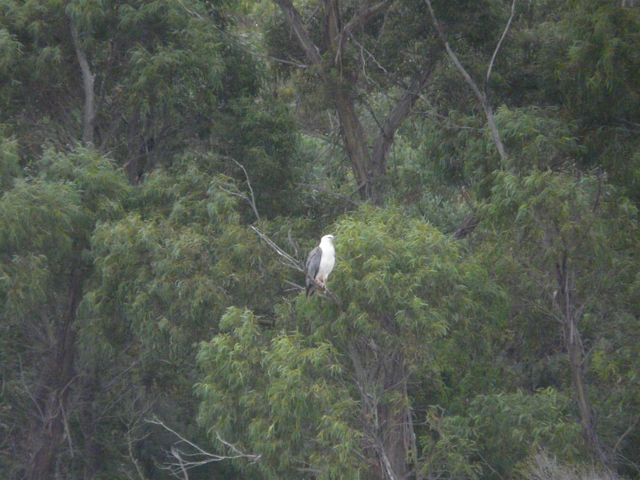
Sea Eagle
Huon pine left lying on the forest floor is still pristine and much of the furniture and ornaments that are still worked here is taken from old trees. Felling of new trees is banned to safeguard those remaining. This is also a remote place free from human intrusion so when passing near Hells Gate at the far end of the estuary entering the Tasman Sea we saw a rare Sea Eagle perched in a tree (The seas south of Tasmania are the roaring 40s where seas can build to huge swells). The boat then followed him as he flew from one tree to another with 20 people gawking at him . The channel outlet to the Tasman sea is very small and many ships have been wrecked over the years. All boats have to enter between two rocks about 30 meters apart – hence the name Hells Gate . As you leave the safety of the natural harbour so the swell hits you which luckily on the day we visited was nice and small – but still knocked you off your feet as the boat breached while turning.

Dove Lake
The next day we headed north to Cradle Mountain national park. The next morning the day broke to clear crisp sunshine and stunning views over the park of lakes and mountains. This is fabulous countryside for hiking and we took a 3 hour hike up to Crater lake passing 2 other large lakes on the way and a waterfall. The whole area is teeming with wallabies and wombats and you see their droppings everywhere. In fact they seem to prefer doing their business on the path or in the case of our chalet on the garden table.

Wallaby
One wallaby hopped straight up to our front door in the early evening and Anna saw a kangaroo just outside. There are only three types of snake in Tasmania but unfortunately all 3 are poisonous so while keeping an eye out for these I jumped as a wallaby leapt 12 inches away from my foot while walking through grassland. Naomi then found a snake curled up asleep in a bush just inches from our path. The day was stunning and the views incredible.

Tamar River, Launceston
Today we are in Launceston – which could be any market town in Britain with Victorian and early 19th century parades and houses. It does have a spectacular gorge and was worth the walk as we waited for Naomi to get her hair done. The weather has been very mild and sunny which is lucky as in the Cradle Mountain area they can have snow any time of the year apparently.

Platypus diving
Aftre dropping off Naomi at the airport in Launceston for her 3 stop flight back to Port Augusta we drove up the Tamar River first to Beauty Point where there is a Platypus and Echidna reserve. The Platypus must be the most amazing animal that exists today . It is a mammal, that lays eggs, suckles its young, has a bill like a duck and builds nests.

Echidna
The Echidna is a close relation, being a spiny ant eater and looks a bit like a large hedgehog. We saw one Echidna walking down a path in Victoria and the elusive Platypus lives in New South Wales and Tasmania in rivers and creeks. It is mainly nocturnal and the male has a poisonous horn on its foot to ward off predatators – so despite being very pretty it is probably best not to pick one up.

